


Quick read (under 1 minute): An electronic toll collection sign identifies the lanes where payment is processed automatically (without stopping the vehicle), using certified transponder devices. Dynamic tolling, on the other hand, is a variable pricing system that adjusts the fare based on criteria such as time of day, vehicle category, or traffic demand. Both concepts require precise, reliable, and updatable signage: exactly the type of solution manufactured by companies specializing in Intelligent Transportation Systems (ITS). If you manage toll infrastructure or are integrating a new project, this article will help you understand what you need (technically and from a compliance standpoint) and avoid the most common mistakes in signage specification.
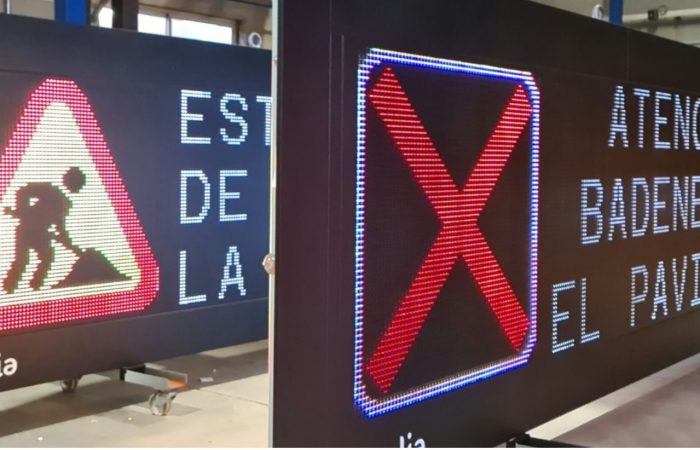
UNE-EN 12966:2005 Standard for VMS signs
What is an Electronic Toll Collection Sign?
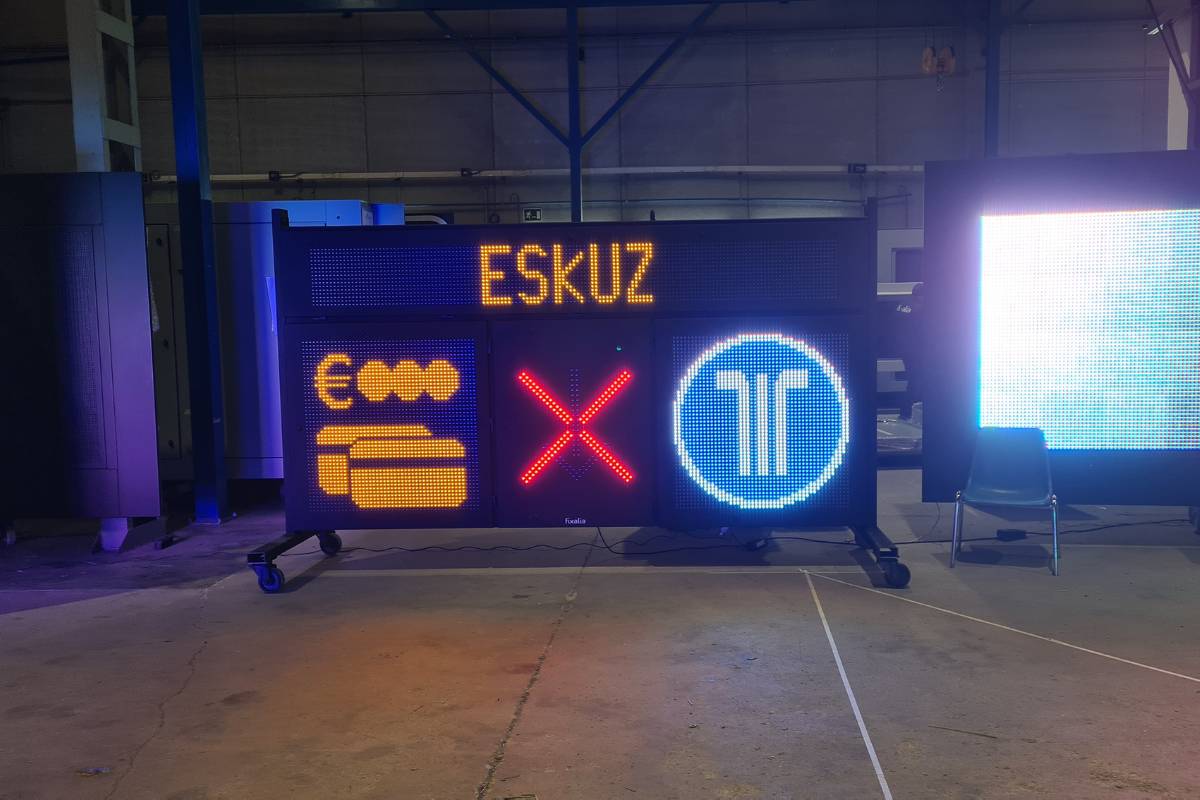
Anyone who drives frequently on toll roads knows that lane marked with the letter “T” or a transponder icon: that’s the electronic toll lane. The electronic toll collection sign is the physical element (illuminated or static) that informs the driver that the lane allows automatic electronic payment without stopping or handling cash.
The system that makes this payment possible relies on DSRC (Dedicated Short-Range Communications) technology at 5.8 GHz, managed through interoperable standards and valid across the entire toll road network. The devices carried by drivers (mounted on the windshield) are issued by multiple operators: banks, fleet management companies, and specialized providers.
The signage that makes this system visible and operational on the road; the panel indicating which lane to use, whether it’s open or closed, which fare applies, is precisely the domain where ITS-specialized manufacturers operate, like us.
You might also be interested in: Why Fixalia leads in Variable Message Signs (VMS)
From a functional standpoint, the electronic toll collection sign serves three simultaneous purposes: guiding the driver to the correct lane, reducing friction at the payment point, and improving overall vehicle flow at the toll station. A driver approaching a toll plaza without clear signage makes lane errors; those errors generate backups, dangerous maneuvers, and time losses that translate into real operational costs for the road operator.
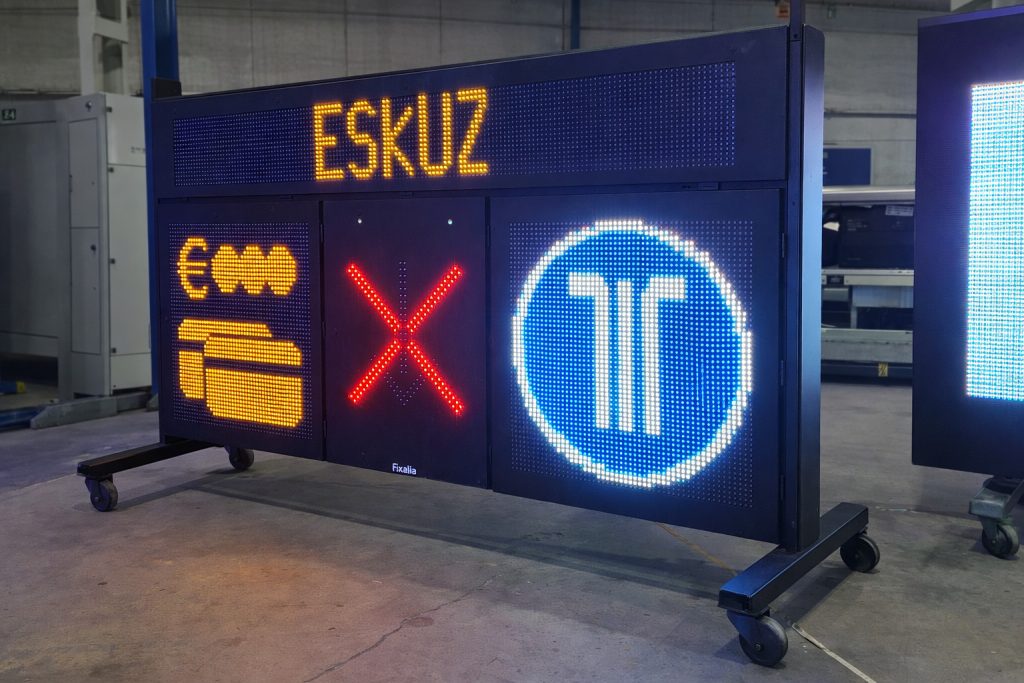
Beyond the basic pictogram, in modern installations the electronic toll collection sign is typically dynamic: it can display whether the lane is open or closed, whether there are technical incidents in the system, or even the applicable fare at that moment. This requires variable message sign (VMS) panels; not conventional static signs.
Dynamic Tolling: when the fare changes based on conditions
The concept of dynamic tolling, also referred to as “variable-rate tolling”, goes one step further than electronic payment. Here, not only is payment automatic: the fare itself varies based on parameters such as time of day, vehicle category, or demand level on the segment.
The objective is both economic and environmental: incentivizing drivers to spread their trips across lower-demand time windows, reducing congestion on the most saturated segments, and cutting emissions during peak hours. Cities like Stockholm and Singapore have been applying real-time congestion pricing models for decades, with measurable results in congestion reduction.
In the US, for example, dynamic tolling in real time is already operational across a growing number of managed lane networks; including HOT lanes (High-Occupancy Toll) in states like California, Virginia, Texas, and Florida. Variable pricing based on real-time demand is the standard approach, with fares updating every few minutes based on traffic conditions. In Europe, variable tolling mechanisms are already operational across major networks: France and Italy apply time-based fare modulation on their motorway concessions, and the EU’s EETS framework (Directive 2019/520) is accelerating interoperability and dynamic pricing adoption across member states.
For any dynamic tolling system to function correctly, signage must update fare information in real time. A fare that changes but isn’t displayed clearly and accurately on the lane panel doesn’t just create confusion: it can lead to driver complaints and legal liability for the operator.
This is where variable message signs (VMS) and ITS management systems become critical infrastructure, not an optional add-on.
Key differences between Electronic Toll Collection Signs and Dynamic Tolling
Although often used together, these are distinct concepts. The table below summarizes the main differences:
Feature | Electronic Toll Collection Sign | Dynamic Tolling |
Primary function | Identify the electronic payment lane | Variable pricing based on time, category, or demand |
Required signage type | Fixed or variable (open/closed lane) | Variable: mandatory (real-time fare updates) |
Associated technology | DSRC 5.8 GHz / EETS interoperable standard | ITS platform with centralized management |
Information update | Periodic (lane status) | Continuous (fare, status, incidents) |
Key regulatory reference | EN 12899-1 (static signs) + EN 12966 (VMS) | EETS Directive 2019/520 + EN 12966 |
Status in Europe (2026) | Widely deployed across EU toll networks | Operational in several markets; expanding under EETS framework |
Technical and Regulatory Requirements for Toll Booth Signage
Toll booth signage in Europe is governed by a regulatory framework that must be understood in detail before undertaking any project.
The primary technical reference for static roadway signing is UNE-EN 12899-1:2009, the harmonized European standard that establishes design, materials, retroreflectivity, and performance requirements for fixed vertical signs, including those used at toll facilities. For variable message signs used in lane management or fare display, the applicable standard is UNE-EN 12966:1:2006+A1:2010, which defines luminance classes, environment categories, and homologation requirements specific to this type of system.
At the interoperability level, the EETS Directive (2019/520/EU) (the European Electronic Tolling Service framework) sets the foundation for cross-border electronic toll collection across EU member states, establishing technical and contractual requirements for toll chargers and service providers operating within the network. Any toll signage solution deployed in an EETS-compliant environment must align with this framework.
In practice, ITS integrators working on electronic toll collection sign or dynamic tolling projects must ensure:
- Adequate luminance for the environment (outdoor, tunnel entrance, covered plaza) to guarantee readability in all weather and light conditions, as defined by EN 12966:2005 luminance classes.
- Minimum IP45 protection for outdoor enclosures, with IP66 recommended in areas exposed to heavy rain, pressure washing, or road spray.
- Protocol compatibility with management platforms such as NTCIP, Modbus, or proprietary toll operator systems: this must be defined at specification stage, not resolved after contract award.
- 24/7 reliability without interruptions: a toll lane out of service means direct revenue loss and potential safety risk.
- Remote message update capability: especially critical in dynamic tolling systems where fares or lane status change frequently and must reflect accurately on every panel simultaneously.
A common mistake in procurement and project design is underestimating signage as part of the overall system: the fare management platform gets designed in detail while signage is left for the end. The result is integration incompatibilities, delayed commissioning, and unplanned cost overruns.
Do you need custom VMS?
Tell us about your project and we will advise you on the best smart signalling solution.
Practical tips for ITS managers and integrators: how to choose the right signage
If you’re designing or upgrading signage for a toll facility (whether conventional, electronic toll collection, or dynamic tolling) these are the criteria that separate a long-term performing installation from one that generates problems from day one:
- Define first what information you need to display. A panel that only shows “ETC / CLOSED” is not the same as one that must update fares and vehicle categories in real time with variable text. The second requires Full Matrix technology; the first can be resolved with certified static signage.
- Think total cost of ownership, not just unit price. Quality LED panels exceed 100,000 hours of useful life. A cheaper panel that requires module replacement every three years has a far higher total cost of ownership than the initial bid price suggests.
- Require protocol compatibility in the specification. If your management platform runs on NTCIP and the panel only supports legacy Modbus, you have a guaranteed integration problem. This must be in the technical requirements, not negotiated after contract award.
- Consider centralized management. In multi-lane facilities, updating all panels simultaneously from a control center reduces incident response time and eliminates human error in manual lane-by-lane operation. In dynamic tolling installations, this is not a nice-to-have; it’s a requirement.
- Don’t underestimate post-sale support. In critical infrastructure, response time to a fault matters as much as product quality. Ask about maintenance SLAs and original spare parts availability before awarding the contract.
You might also be interested in: Why Full Matrix VMS are transforming traffic management in 2026
Electronic Toll Collection Signage is not the last step: it’s the piece that connects everything
Electronic toll collection signs and dynamic tolling signage are not abstract concepts: they are real infrastructure that directly affects road safety, driver experience, and operator revenue. The European regulatory framework (anchored in EN 12966:2005+A1:2009, EN 12899-1:2009, and the EETS Directive 2019/520/EU) confirms that intelligent variable signage is now a structural component of any serious toll management project across the EU.
Choosing the right signage in terms of technology, regulatory compliance, and manufacturing partner is not a project detail: it’s a strategic decision that conditions the performance of the entire installation for years.
If you’re developing or upgrading a toll facility in Europe and need technical guidance on which signage best fits your project, Fixalia has decades of experience solving exactly these challenges across European infrastructure projects with our toll mobility solutions.
Have a project in mind? Tell us about it. We’ll respond with a no-commitment technical proposal.