


Quick read (under 1 minute): If you landed here looking for a clear explanation of what traffic information signs are, how they work, and what role they play in road management — here is the short answer: they are dynamic signalling systems that relay relevant information to drivers in real time, covering everything from traffic jams and accidents to diversions, speed restrictions, and adverse weather conditions. When properly designed, they help improve road safety, message readability, and drivers’ ability to respond in time. Beyond that, for infrastructure managers, concession operators, and public authorities, they are also a key tool for regulating traffic flow, integrating data from ITS systems, and ensuring reliable communication across every operational scenario. In this article, we will look at what types exist, how they differ from other traffic information signs, and what criteria to consider before choosing a solution for a real-world project.
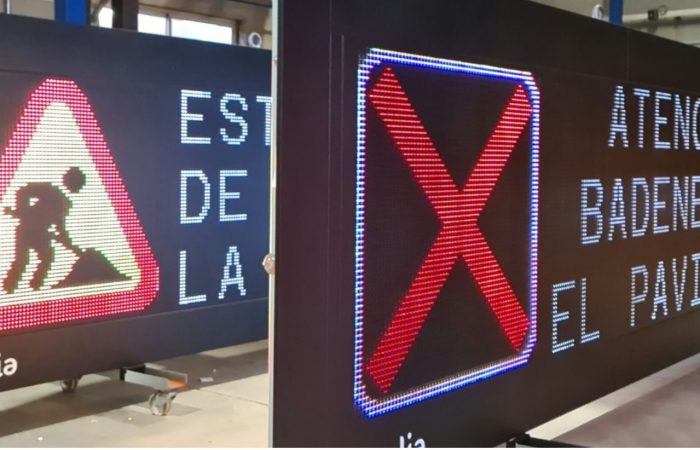
UNE-EN 12966:2005 Standard for VMS signs
What Are Traffic Information Signs and What Are They Used For?
Informative traffic signs are variable signalling devices designed to display updated messages based on real-time conditions on the road. Their primary purpose is to communicate with the driver, as clearly as possible, information that helps them anticipate a manoeuvre, adjust their driving behaviour, or understand an incident before they reach it. This type of solution is part of intelligent traffic management and is integrated into modern road infrastructure, particularly on motorways, high-capacity roads, access-controlled zones, tunnels, toll plazas, and complex urban environments.
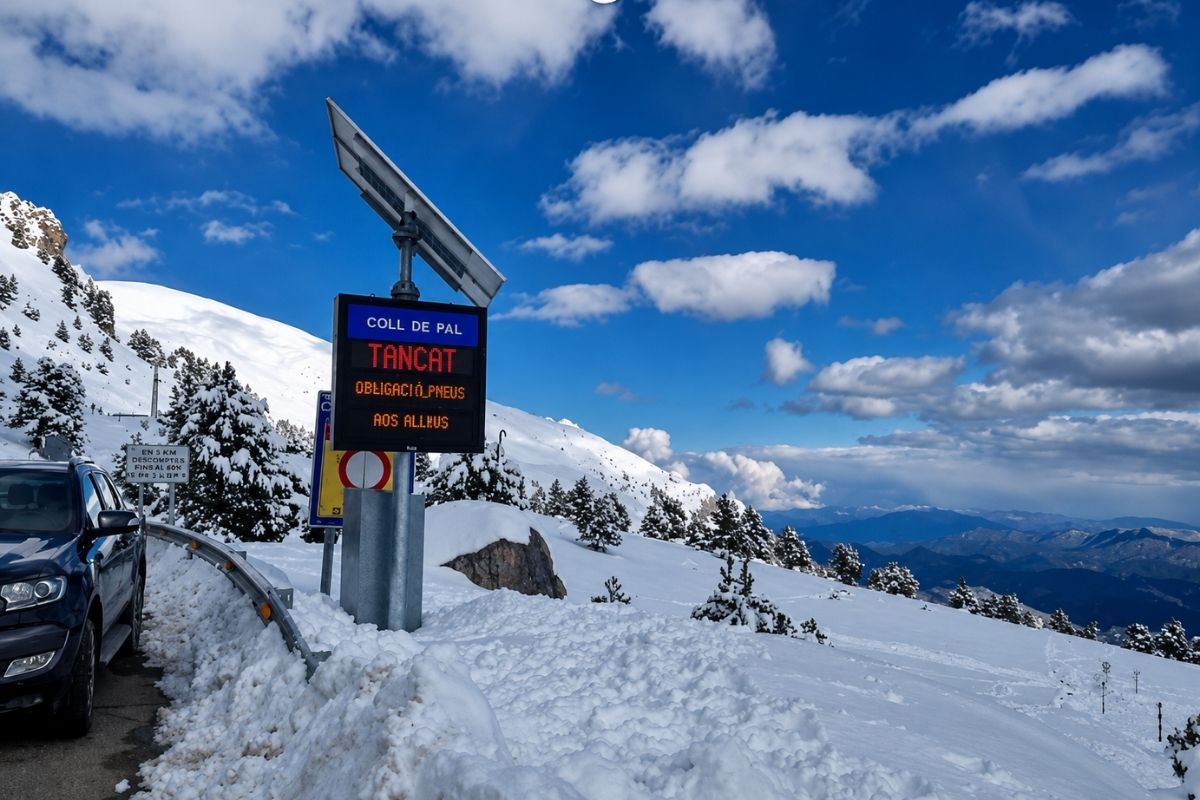
Unlike fixed signage, which conveys a permanent message, traffic information signs allow content to change based on the current operational situation. This flexibility is especially valuable when dealing with congestion, accidents, roadworks, fog, temporary restrictions, diversions, or the need for dynamic flow regulation. Spain’s DGT (Directorate General of Traffic) recognises these systems within its road information management and dissemination framework, and their use is backed by dedicated manuals and specific guidelines.
From a functional standpoint, this is about far more than “displaying messages on a screen.” An effective sign must be visible, readable, and timely — meaning it must show the right message, at the right moment, with the legibility required for drivers to process it without unnecessary effort. This is where hardware quality, optics, electronics, remote control, and integration with management platforms create a real difference between seemingly similar solutions.
Informative Traffic Signs, VMS, and Fixed Signage: Key Differences
In practice, terms such as informative traffic signs, traffic signs, and variable message signs are often used interchangeably. However, it is worth clarifying the distinctions. When we talk about informative traffic signs in the broad sense, we are referring to any luminous or dynamic solution that provides information to road users.
When we talk about VMS (Variable Message Signs), we are entering a more specific technical category: devices capable of displaying text, symbols, or graphics that change dynamically according to a defined operational logic.
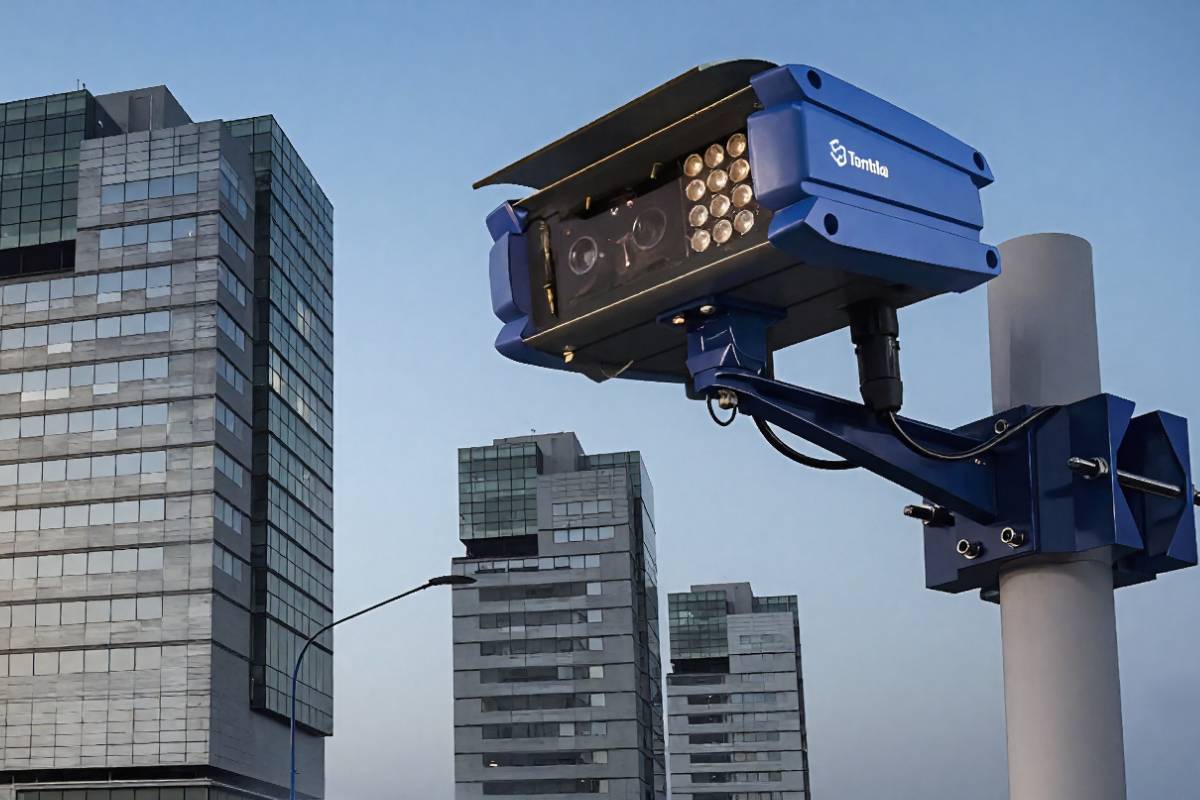
The distinction from fixed signage is even clearer. A conventional sign is designed to convey a stable, unchanging message, whereas dynamic traffic information signs respond to changing conditions. This makes them far more valuable in infrastructures where traffic is affected by circulation intensity, weather, incidents, or operational requirements. Moreover, in many cases these devices are integrated with sensors, cameras, weather stations, or control software, so the information displayed is not just reactive — it is part of a broader management strategy.
For a deeper look at the technical foundations, it is worth reviewing the UNE-EN 12966 standard for variable message signs, which establishes the reference framework for evaluating the performance requirements applicable to this type of solution.
For a deeper look at the technical foundations, it is worth reviewing the UNE-EN 12966:2005 standard for variable message signs, which establishes the reference framework for evaluating the performance requirements applicable to this type of solution.
Types of Traffic Information Signs by Function and Location
Not all informative traffic signs serve the same purpose. Choosing the right one starts with understanding that each environment demands a different solution — both in terms of visibility and operational logic.
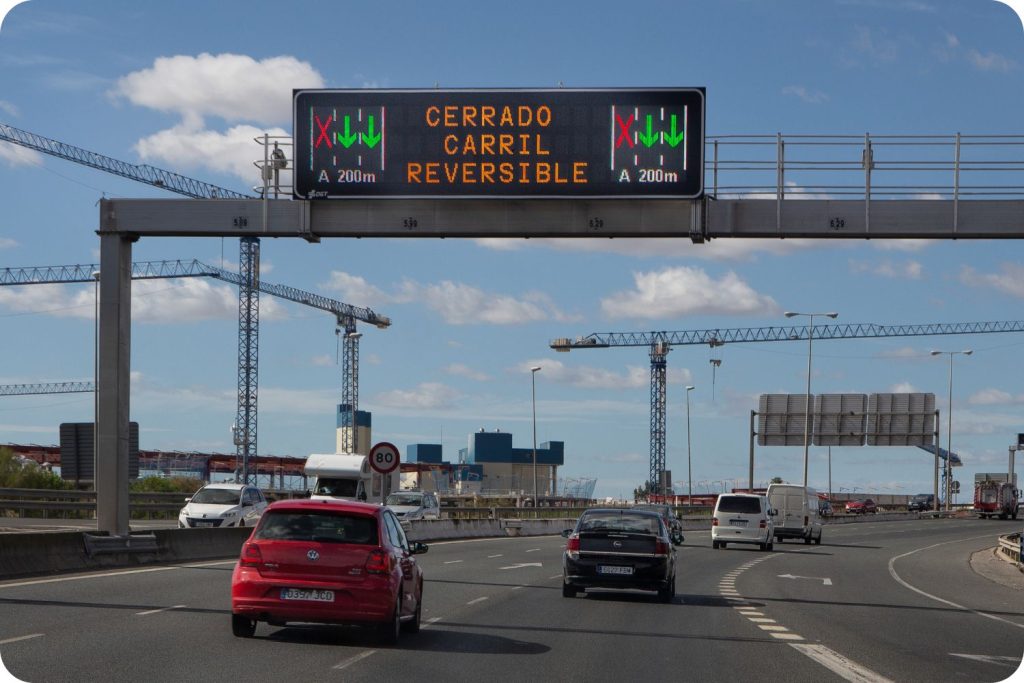
On motorways and interurban roads, the standard approach involves signs focused on communicating incidents, journey times, congestion, weather conditions, or lane management changes. Here, the priorities are long-range readability, equipment robustness, and message reliability under varying light and weather conditions. In this context, a well-engineered full-matrix variable solution offers far greater flexibility and effectiveness in message representation.
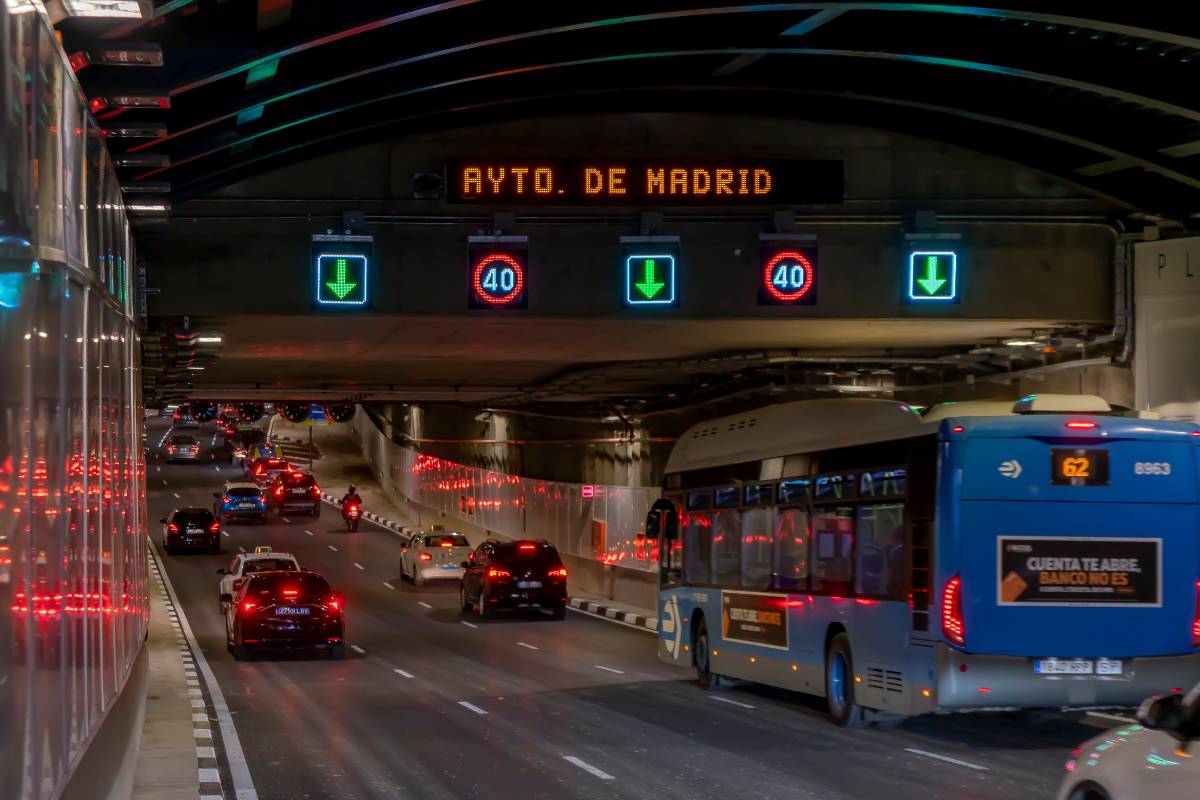
In tunnels, toll plazas, and access-controlled zones, signage must accommodate more critical manoeuvres within environments where early warning is essential. In these settings, integration with other infrastructure components becomes even more critical — the sign does not operate in isolation but as part of a broader safety and operations ecosystem.
In urban environments, traffic information signs typically serve a function more closely tied to mobility, access regulation, or local incident communication. Even where the visual context is more complex, they remain effective tools for managing flow and improving driver decision-making — provided the message is clear and relevant.
Finally, mobile or temporary solutions designed for roadworks, maintenance, diversions, or events represent a distinct category. In these cases, the priorities shift beyond message quality to include rapid deployment, autonomous operation, and ease of use.
What Messages Can Informative Traffic Signs Display?
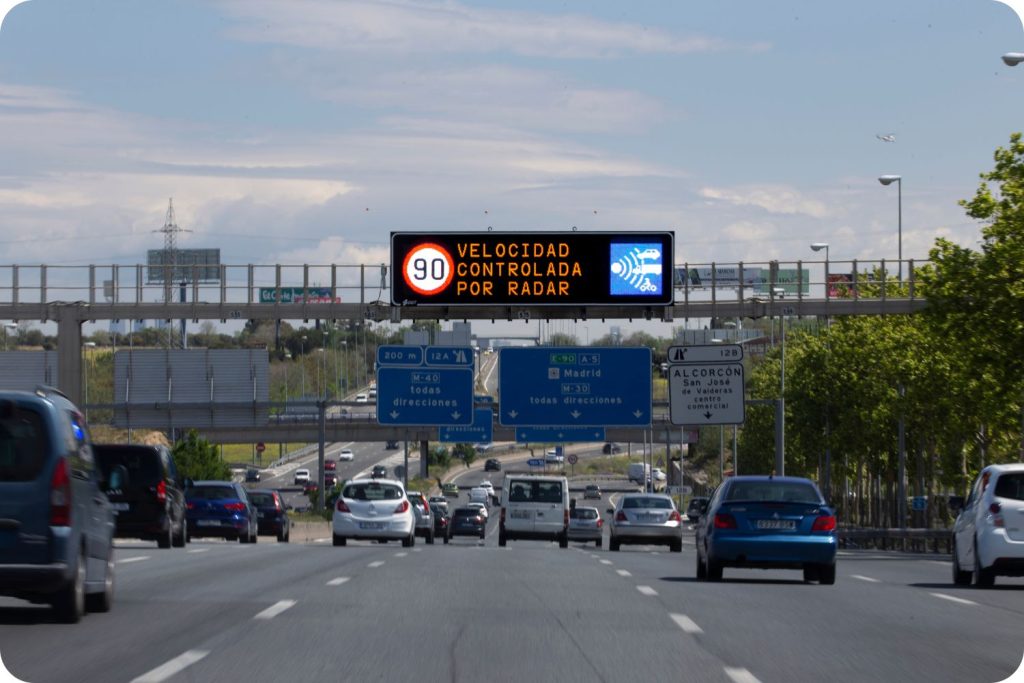
One of the reasons traffic information signs carry so much weight in road operations is their ability to adapt the message to a wide range of situations. The most common content categories include accidents, congestion, partial closures, roadworks, adverse weather, temporary speed limits, driver advisories, and operational diversions.
That said, the fact that a sign can display many different messages does not mean it should do so without a clear framework. Variable signage is only effective when there is a clear hierarchy of information. On the road, a driver has just a few seconds to read and process what they see. Messages must therefore be concise, unambiguous, and consistent with the actual conditions on the road. The Variable Signage Manual approved by Spain’s Central Traffic Authority specifically addresses the criteria for use and the need to standardise communication through these systems.
In practical terms, this means a well-designed sign is not just about good visibility. It must also be backed by an operating logic that minimises ambiguity and avoids unnecessary or uninformative messages.
Related reading: “Why Full Matrix VMS are transforming traffic management in 2026” which explains why certain technologies offer greater representational flexibility, legibility, and adaptability.
Do you need custom traffic information signs?
Tell us about your project and we’ll advise you on the best smart signage solution.
Integration with ITS Systems and Traffic Control Centres
It would be hard today to think of traffic information signs as standalone elements. Their true value emerges when they are integrated within ITS systems and connected to control centres, operations platforms, management software, cameras, radar devices, weather stations, and traffic counting equipment. This integration means that the information displayed on a sign is not solely dependent on a manual input: it is part of a coordinated process of monitoring and response.
From a procurement perspective, this is a decisive consideration. When a public authority or concession operator evaluates this type of investment, the question should not simply be which sign to buy, but how it will integrate into the existing technical ecosystem and into the day-to-day management of the road.
Choosing a manufacturer or supplier with a systems-level vision (rather than just a product-level one) typically makes the difference between a correct installation and an infrastructure that remains genuinely useful over time.
Key Criteria for Selecting Informative Traffic Signs for a Project
When selecting informative traffic signs, the first question should not be about screen size or pixel count, but about what operational problem needs to be solved. Informing drivers on a high-speed motorway is a very different challenge from managing a controlled access point, regulating a toll plaza, signing a tunnel, or deploying temporary equipment at a roadworks site. Each use case determines reading distance, message complexity, required luminance, system architecture, and maintenance needs.
It is equally important to assess integration capability, equipment robustness, energy efficiency, and ease of servicing. In many projects, the total cost of ownership depends far less on the upfront purchase price than on how the system performs over the years. A sign that supports remote diagnostics, optimised maintenance, and reliable message delivery typically delivers substantially more value than a solution that looks competitive on paper but underperforms in the field.
For a public authority or concession operator, the decision must take a long-term perspective. This is not simply about installing traffic signs — it is about deploying a robust, scalable solution that genuinely improves driver information, road safety, and operational efficiency. If there is no clear alignment between the sign, the message, and day-to-day operations, the investment loses much of its purpose.
Conclusion
Talking about informative traffic signs means talking about visibility, safety, road operations, and responsiveness. They are a critical tool for better communication on the road, but their effectiveness depends on more than just the technology — it depends on context, message design, integration with ITS systems, and the operational logic behind them.
If the goal is to deploy a reliable, durable, and genuinely useful solution, the project must be approached from a holistic perspective. That means analysing the environment, the types of messages required, the integration with existing infrastructure, and the level of technical performance the road demands. At Fixalia, that approach translates into solutions designed for real operational environments — not just theoretical specifications. If you are planning a new installation or an upgrade of your traffic information signs, now is a good time to seek expert technical advice and define which solution best fits your infrastructure.