


Quick read (under 1 minute): If you’re wondering how to apply signage technology to smart urban mobility, here’s the short answer: dynamic signage systems are now a cornerstone of city traffic management. They allow you to inform drivers in real time, manage access, guide them to parking spots, and actively reduce congestion. But beyond that, for local governments, infrastructure managers, and mobility operators, they represent a technical tool to integrate data, communication protocols, and ITS platforms in an increasingly demanding urban environment. In this article, we’ll look at the technologies behind a smarter city, how variable signage works in urban settings, and what criteria should guide its implementation in a real-world project.
Why Fixalia leads in Variable Message Signs (VMS)
What we mean by smart urban mobility today
Smart urban mobility is much more than just digitizing traffic signs. It refers to a mobility management model where technology, data, and infrastructure work together to optimize the movement of people and vehicles in urban environments. According to the Ministry of Industry and Tourism’s publication on smart mobility, this approach involves integrating information, communication, and control systems to improve the safety, efficiency, and sustainability of urban traffic.
In practice, this translates to infrastructure capable of responding dynamically to what’s happening on the road: detecting congestion, adapting signage, redirecting traffic flows, and communicating incidents before they become a problem. Variable signage plays a crucial role in this setup because it’s the visible interface between the management system and the driver.
From an international regulatory perspective, ISO approaches smart city mobility as an integrated system where signage and user information elements are part of a broader connected city architecture. This forces manufacturers and solution providers to design products that don’t just work in isolation but integrate seamlessly into data and control ecosystems.
The role of dynamic urban variable message signs in the smart city
Urban signage has evolved a lot in recent years. It’s no longer just about installing a fixed sign that indicates a traffic rule. Variable message signs (VMS) and next-generation urban displays allow the message to be adapted in real time, reacting to traffic situations, events, roadworks, or incidents. That responsiveness is what sets a city with smart signage apart from one with conventional signage.
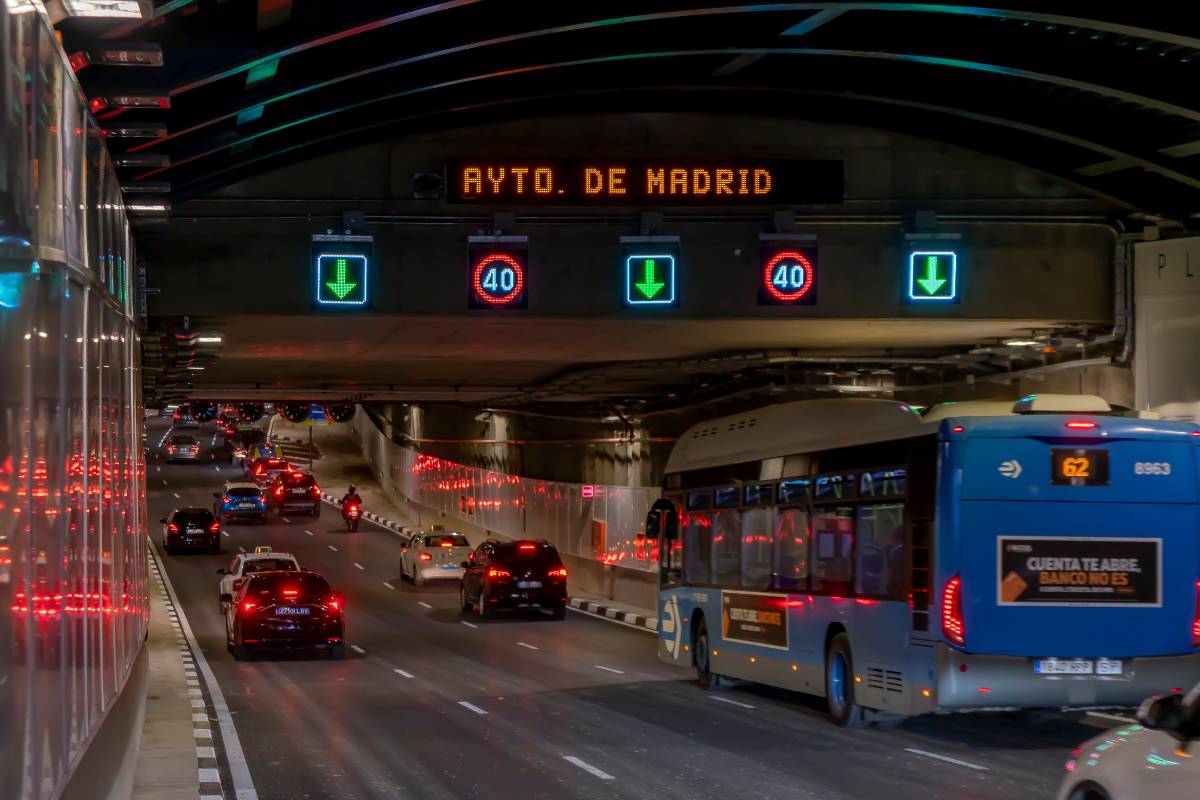
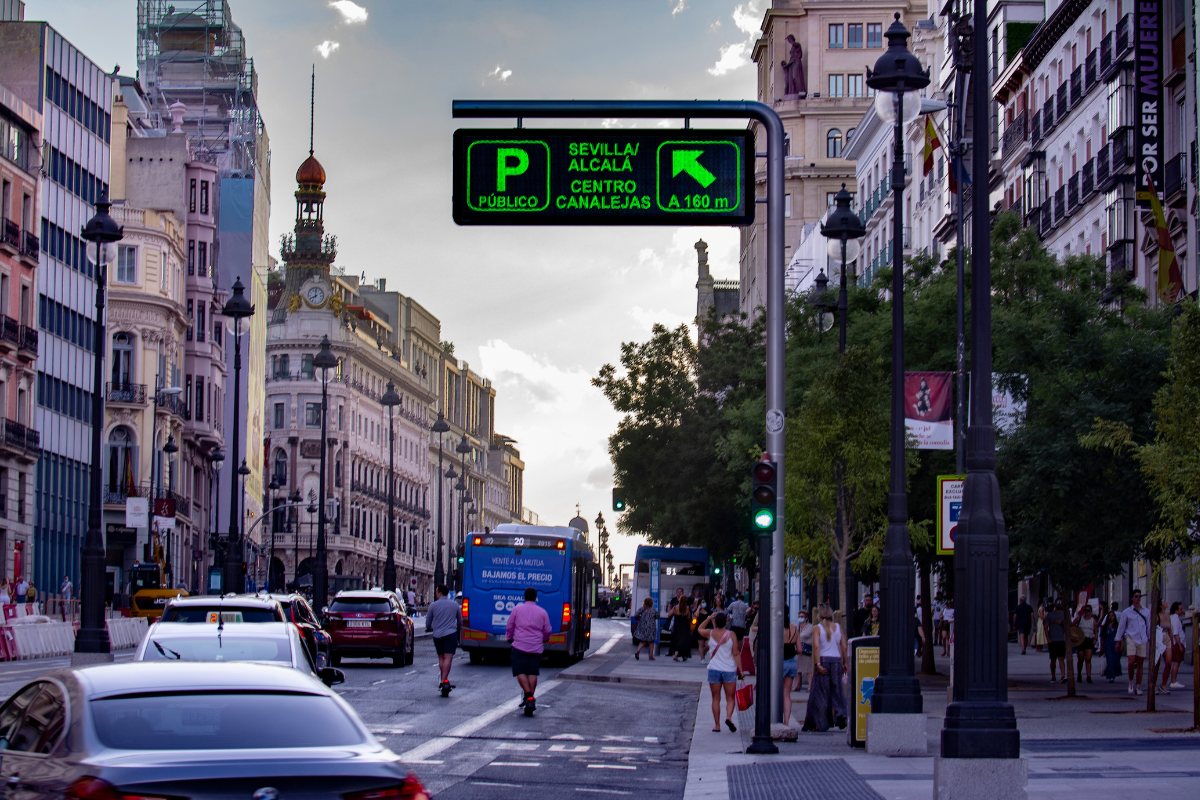
In urban environments, the most common use cases include guiding drivers to parking with real-time availability like the panel in the featured image regulating access to low-emission zones (LEZ), marking bus or bike lanes, and communicating traffic restrictions due to events or weather conditions. In all of them, the common denominator is the same: an updated, visible, and relevant message for the driver.
Hardware quality matters just as much as the system’s logic. An urban panel that can’t be read clearly under direct sunlight, or that loses luminance in adverse conditions, loses its effectiveness even if the backend management system is flawless. That’s why choosing the right display technology, brightness control, and panel optics is critical in smart urban mobility projects.
Key technologies for applying smart signage in the city
Not all signage technologies respond equally well to the demands of an urban environment. Here’s a look at the most relevant ones and what they bring to mobility management:
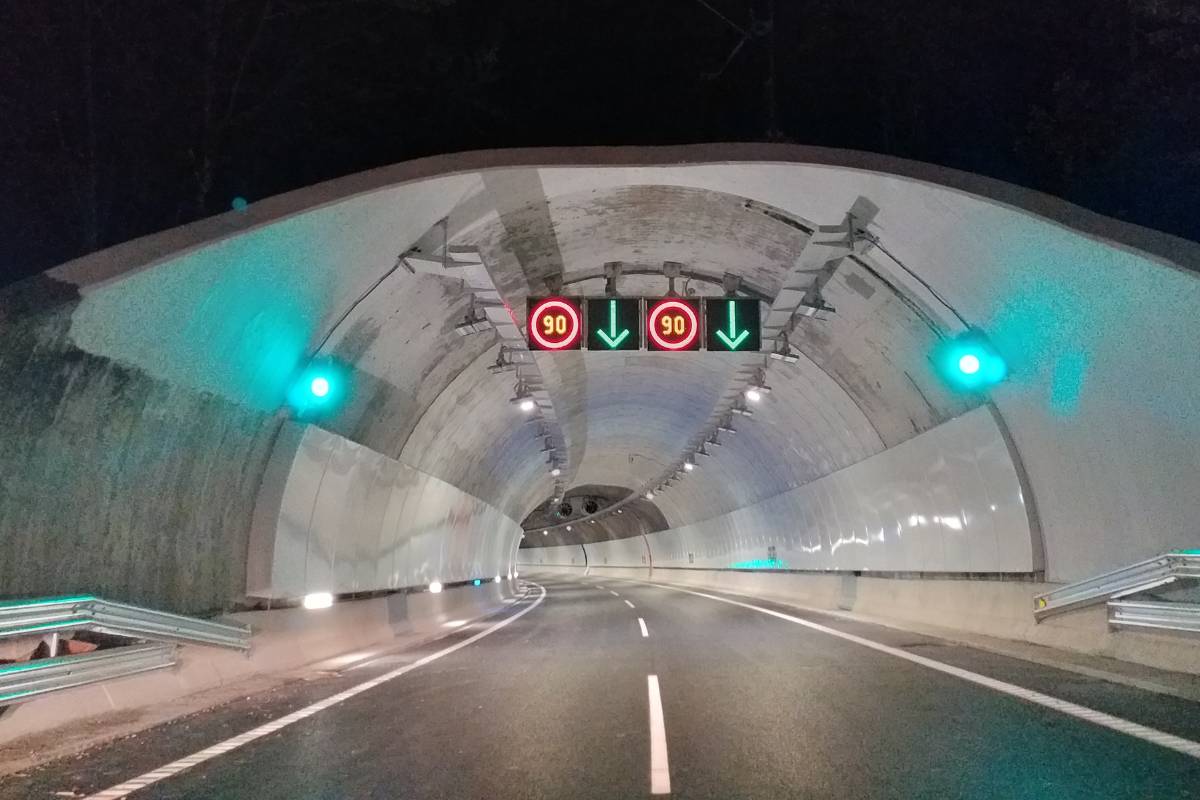
- Full-matrix variable message signs (VMS): These are the most versatile. They can display text, pictograms, and arrows with complete layout freedom, making them ideal for complex or custom messages. Their ability to adapt to different scenarios makes them the go-to solution for advanced urban mobility projects.
- Parking guidance signage: Parking guidance systems integrate space counters, sensors, and LED panels to direct drivers straight to the nearest available parking spot. They reduce “cruising for parking,” which is one of the biggest causes of urban congestion.
- Access control and low-emission zone (LEZ) panels: More and more cities are regulating access to certain areas based on vehicle type, time of day, or pollution levels. Dynamic panels allow these restrictions to be communicated clearly and kept up to date, adapting to current regulations.
- Public transport priority signage: Smart signage can be integrated with public transport management systems to give visual and operational priority to buses and trams, improving the system’s punctuality and flow.
Do you need custom variable message signs?
Tell us about your project and we’ll advise you on the best smart signage solution.
Communication protocols: The technical foundation of smart signage
Truly smart signage can’t operate as an isolated system. It needs to communicate with traffic management platforms, parking databases, weather systems, or urban control centers. For that integration to be possible and reliable, working with standardized communication protocols is a must.
In Spain, the benchmark standard for variable signage in urban environments is UNE 199051-2:2012, which sets the communication requirements between signage panels and control systems. Working with this standard guarantees interoperability between equipment from different manufacturers and makes it easier to integrate into existing ITS platforms.
Integrating with open protocols isn’t just a technical advantage: it’s an increasingly common requirement in public tender specifications for urban mobility projects from city councils and public administrations. Therefore, choosing solutions that comply with these regulations isn’t an option, but a prerequisite to participate in smart signage projects.
How signage integrates with urban its systems
Urban Intelligent Transport Systems (ITS) are the ecosystem where modern dynamic signage operates. In a well-managed city, panels don’t receive orders from an operator manually typing the message: they react to data. Data from cameras, traffic sensors, parking space detectors, weather stations, or incident alerts.
For this integration to work, it’s essential that the signage provider has experience and technical capability in the ITS environment. In this regard, Fixalia has been working for years as a benchmark in variable message signs, with solutions designed not only to meet the panel’s technical requirements but to fit seamlessly into the client’s urban management ecosystem.
From a practical standpoint, when a local government decides to implement or upgrade its urban signage, the question shouldn’t be which panel has more pixels, but how that panel will connect to the existing management system, what data it will consume, and how it will be maintained over time. That’s where a system-wide vision, rather than just a product-focused one, makes all the difference.
Keys to implementing smart signage in urban mobility projects
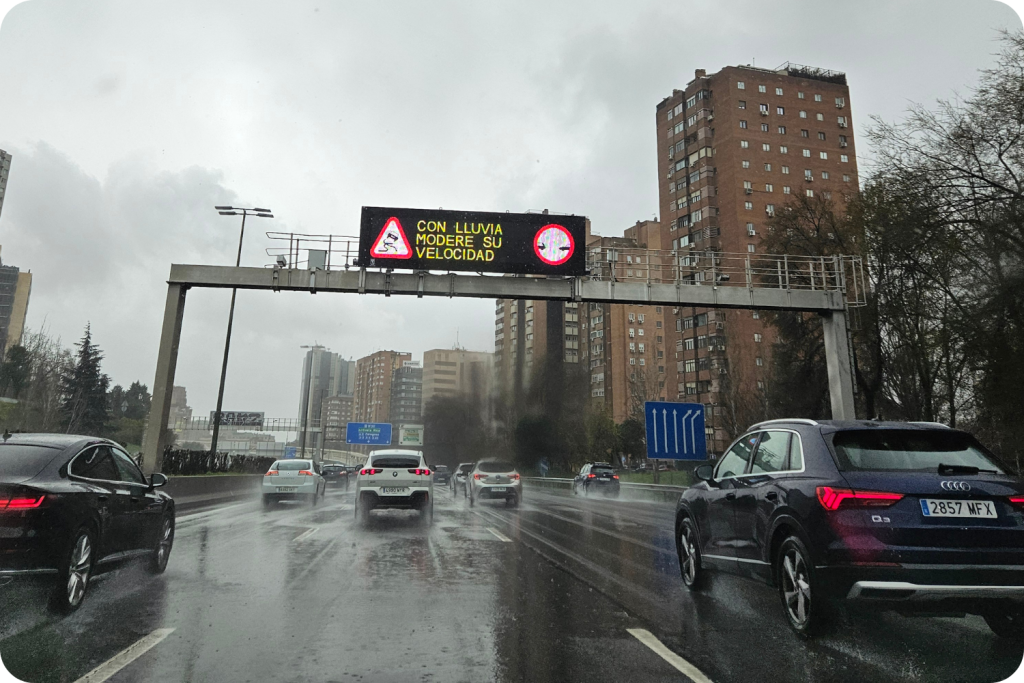
Implementing signage technology for smart urban mobility isn’t a decision that should be made just by looking at a product catalog. Several factors determine the success of a project:
- Define the use case precisely: A parking zone isn’t the same as an LEZ access point or a public transport corridor. Each scenario has different requirements for visibility, integration, and maintenance.
- Evaluate integration with the existing ITS platform: The panel is a component, not a complete system. If it doesn’t connect well with the management center, it loses much of its value.
- Demand regulatory compliance: UNE 199051-2:2012 and other applicable standards aren’t just technicalities; they’re the guarantee that the system will work independently of the manufacturer in the long run.
- Think about the lifecycle: The investment in smart signage pays off when the system works well for years. That requires robust hardware, remote diagnostics, and a structured maintenance service.
- Value the provider’s experience in urban environments: City signage has specific quirks that don’t always apply on highways. The visual complexity of the environment, proximity to pedestrians, and the need for consistency with urban design require specific expertise.
Conclusion: smart signage, a key piece of future urban mobility
Talking about smart urban mobility means talking about systems that work together to make the city run better. Dynamic signage is one of the most visible pieces of that coordination: it’s what the driver sees, reads, and obeys in a split second. But its effectiveness doesn’t just depend on the panel looking good: it depends on it being well-integrated, well-programmed, and well-maintained.
If your administration or company is considering implementing or upgrading urban signage, now is the time to do it with a system-wide vision. It’s not about buying panels, but about building smart infrastructure that improves mobility, reduces congestion, and provides useful data for city management. At Fixalia, we have the technical expertise and integration capabilities needed to guide you through that process.
Request a consultation and let’s define together the solution that best fits your project.