


Choosing variable message signs for tunnels goes far beyond ticking a regulatory checklist. Every project has unique constraints that—if overlooked—can compromise user safety and the operational efficiency of the system. Selecting the right tunnel variable message signs is essential to ensure visibility, durability, and compliance in these demanding environments.
In this guide, you’ll learn how to identify the best variable message signs for tunnels according to their use, location, and light conditions. We’ll also explain why signage at tunnel exits plays a critical role in maintaining traffic safety once drivers leave the tunnel.
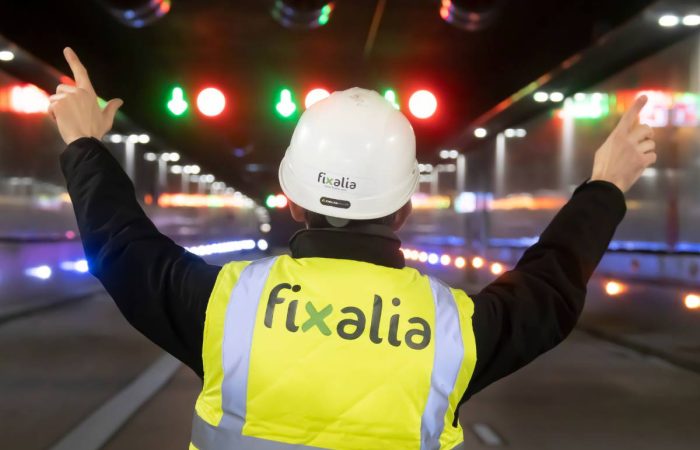
Why Fixalia leads in Variable Message Signs (VMS)
Why variable message signs for tunnels are so important
Tunnels are complex and constantly changing environments. Visibility is reduced, humidity and gases alter perception, and lighting conditions can shift rapidly. Variable message signs for tunnels allow operators to communicate with drivers in real time, improving reaction times and reducing the risk of accidents.
A reliable tunnel message sign system:
- Warns of incidents, restrictions, or detours ahead.
- Guides drivers during emergencies or evacuations.
- Supports dynamic speed control and traffic management.
- Ensures compliance with UNE-EN 12966:2015 and Spain’s 8.1-IC regulations.
Types of variable signage by tunnel location
Not all variable message signs for tunnels function the same way. Their performance depends heavily on where they’re installed—inside, at the portal, or outside. Environmental light, humidity, and airflow affect how each sign is perceived.
1. Signage inside the tunnel
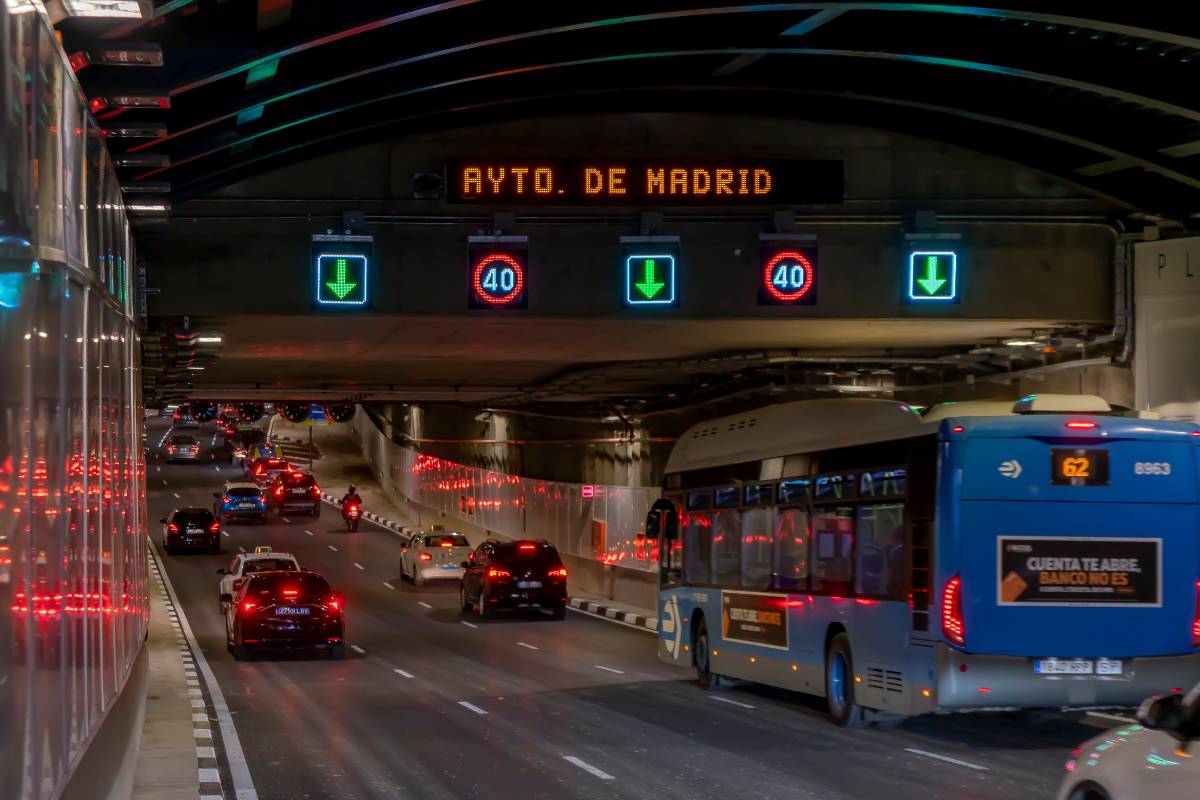
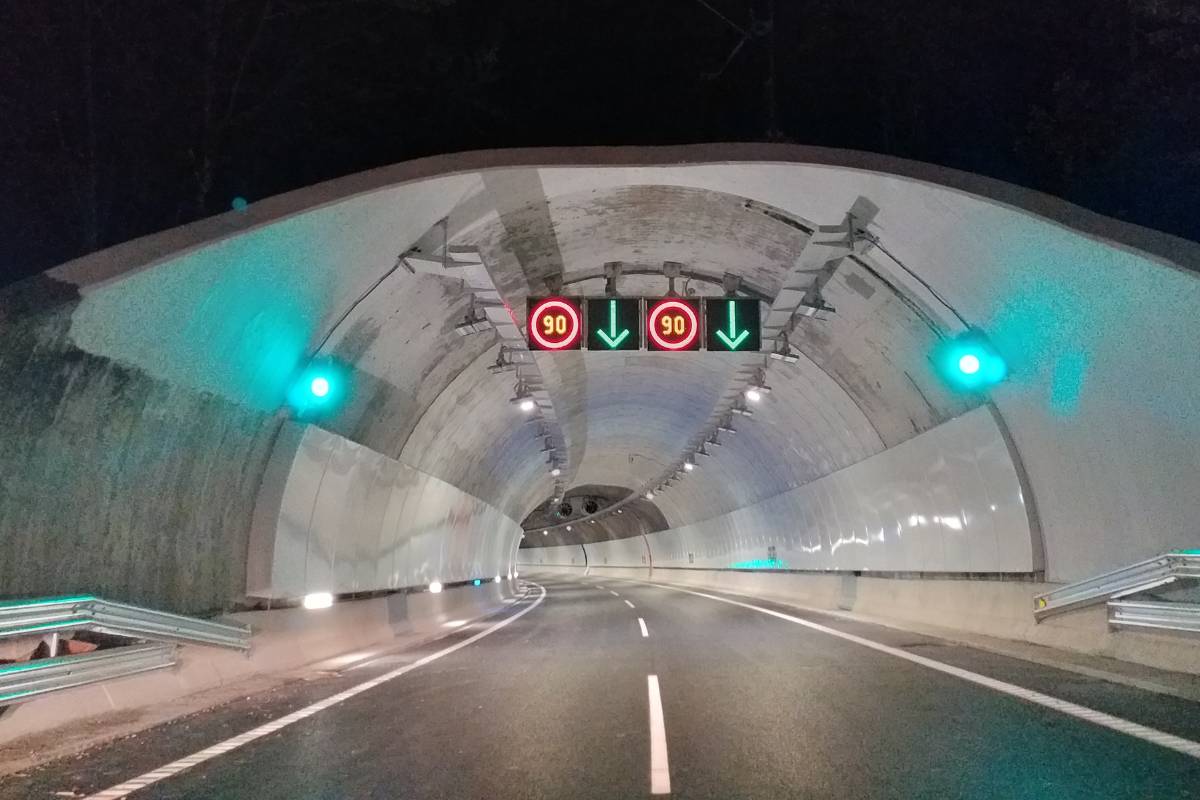
Panels located inside the tunnel operate under relatively stable artificial lighting, which allows predictable luminance adjustment and optimal contrast with their surroundings. Priorities include ensuring that messages are legible at safe distances, considering the posted speed and the driver’s reaction time. It is also essential to address environmental constraints such as humidity and vibrations.
Key points:
- Enclosed environment, low luminance, possible gases and humidity.
- Recommend higher luminance classes and reinforced IP/IK protection.
- Prefer front-access maintenance and anti-vibration systems.
- Guarantee message legibility at safe distances aligned with permitted speed and reaction time.
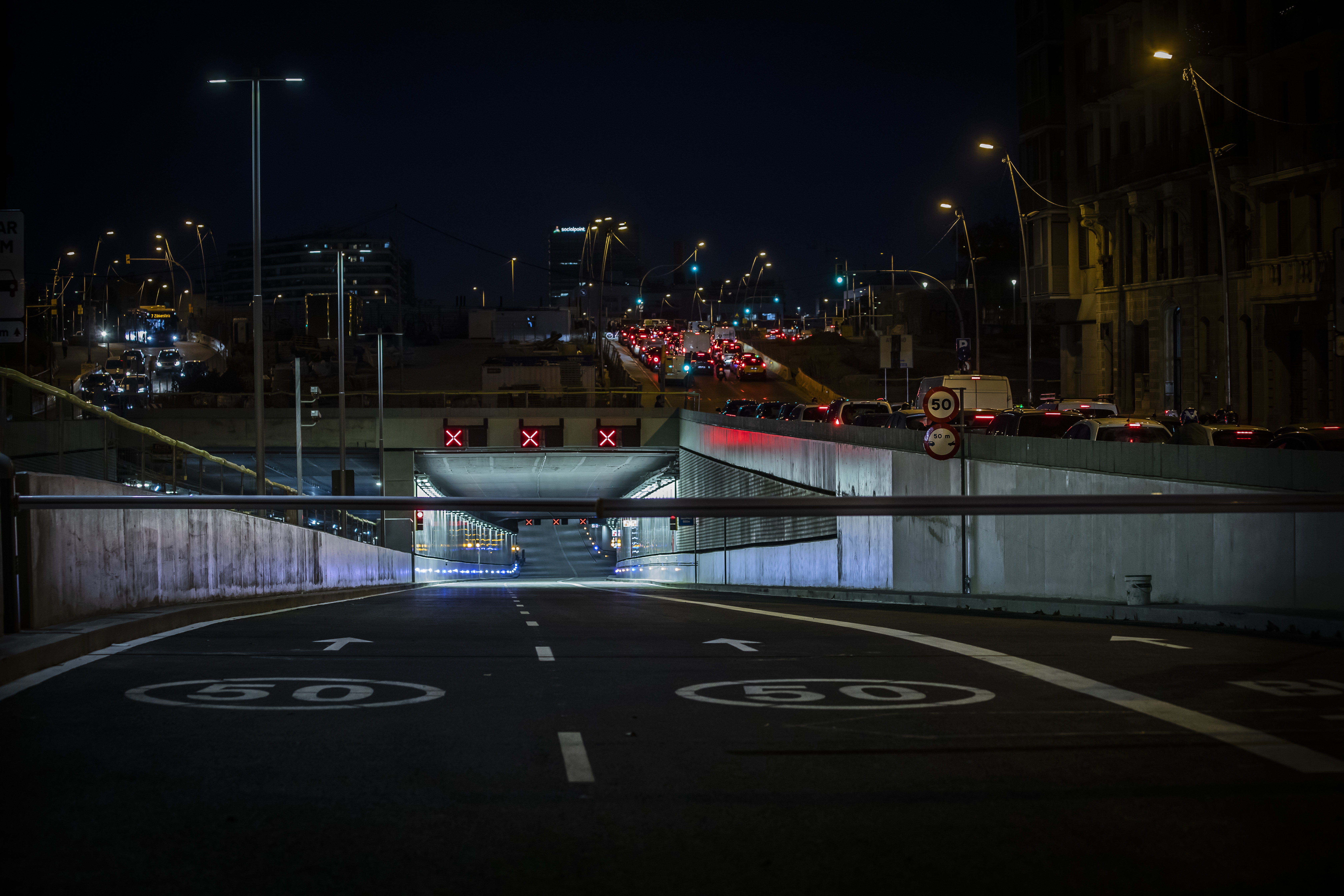
2. Signage at the portal/threshold (affected by exterior illuminance)
The portal is visually critical. In the first meters at both entry and exit, two opposite lighting conditions collide: intense natural light outside vs. controlled artificial light inside. Drivers face the “black hole” (approach) and “white hole” (exit) effects, and the eye needs a few seconds to adapt (often insufficient at motorway speeds).
Therefore, panels with wide-dynamic-range LED technology and photometric sensors that automatically adjust brightness are essential.
Key points:
- Critical zone due to abrupt light contrast changes.
- Automatic brightness regulation to avoid glare.
- Luminance transitions and color visibility are crucial for safety.
3. Exterior signage (before and after the tunnel)
Long before the portal, outdoor panels face extreme variability in natural light. A panel that works on an overcast afternoon can become nearly invisible at midday under direct sun.
These approach panels must inform drivers about tunnel characteristics, restrictions, or incidents with enough lead time. That requires larger displays, increased character height, and luminance levels that can compete with full daylight—plus resistance to wind, rain, and UV exposure.
Key points:
- High exposure to sun, wind, and rain.
- High-legibility VMS at distance, taller character height, UV-resistant materials.
- Consider reading distance and driver viewing angle.
Signage at tunnel exits: why it needs special attention
At the exit, drivers experience a sudden visual adaptation from low light to intense daylight, temporarily reducing their ability to perceive information. Signage at tunnel exits therefore requires stricter contrast and luminance levels. Panels must compete with direct daylight using high-power LED technology and optics designed to minimize reflections. Typical messages at exits—work zones, queues ahead, weather-related speed limits—are critical, and poor perception here can have serious consequences.
Priorities:
- Homogenize speed and lane discipline after the exit.
- Integrate dynamic messages (weather, visibility, nearby incidents).
- Minimize reflections and adjust contrast to exterior light conditions.
- Coordinate panels with the control center for immediate responses.
Do you require customised variable message signs?
Tell us about your project and we will advise you on the best smart signage solution.
How to choose the right panel: essential technical criteria
Beyond baseline compliance, practical criteria make the difference between a robust investment and a system that demands expensive costs later on.
Tunnel type and traffic volume
The type of traffic determines the complexity of the messages you need to transmit. Urban, bidirectional tunnels with high traffic density may require dynamic messaging and real-time coordination with traffic systems. Interurban tunnels with lower density but higher speeds shift the focus to reading distance and reaction time.
Plus, consider heavy vehicles: mixed traffic requires variable message signs for tunnels that remain clearly visible from a truck cab (not just from a passenger car’s eye level).
Key parameters to specify
- Photometry & color: ensure panels meet the luminance classes required by UNE-EN 12966:2005 (e.g., L3/L4).
- Legibility: character height, reading distance, and viewing angle aligned with section speed.
- Robustness: IP/IK ratings, corrosion resistance, and durability against thermal cycles.
- Control & communications: integration with the control center via open protocols (e.g., NTCIP or XML).
- Maintenance: front access preferred, replaceable LED modules, and remote diagnostics.
Our tip: do not choose on price alone. Fully compliant variable message signs for tunnels save on replacements and maintenance in the medium term.
Common mistakes when procuring variable message signs for tunnels
- Ignoring location (interior/portal/exterior) → luminance and contrast vary completely.
- Copy-pasting specs from past projects without adapting to the new tunnel.
- Omitting UNE-EN 12966 class in the technical specification.
- Buying without conformity proofs or certified tests.
- Not planning maintenance or after-sales support. Without periodic calibration, effectiveness degrades early.
- Overlooking automatic brightness control, essential in tunnels with variable lighting.
- Neglecting signage at tunnel exits, causing confusion and harsh braking.
- Underestimating integration needs with existing systems, driving up modification costs during implementation.
A practical checklist for your tunnel signage selection
- Location: interior / portal / exterior
- Photometric & chromatic class per UNE-EN 12966
- IP/IK protection rating
- Character height & reading distance
- Remote control & diagnostics
- Remote control & diagnostics
- Guaranteed technical service & spare parts
Fixalia: your partner for variable message signs for tunnels
With over a decade in the sector, Fixalia knows there’s no one-size-fits-all solution for variable message signs for tunnels. Each project demands a detailed analysis of its specific conditions: geography, traffic profile, applicable standards, and existing systems.
Our approach blends technical quality with tailored service. We work with next-generation LED technology, approved under current UNE-EN standards, and we support the full project lifecycle—from initial analysis and detailed engineering to installation, commissioning, preventive maintenance, and operator training.
Conclusion
Choosing the right solution isn’t trivial. Technical differences between interior, exterior, and portal panels directly impact safety and operations. Starting from Spain’s 8.1-IC instruction and UNE-EN specs is essential, but success also hinges on site-specific nuances: sun orientation, traffic profile, integration with existing systems, and maintenance planning.
Need a tailored proposal? Tell us about your tunnel (location, length, speed limit, traffic mix). Our engineering team will help you specify the optimal variable message signs for tunnels and we’ll prepare a precise quotation.
Find out more here or discover more about Fixalia, leader in variable message signs.