


Quick Read (less than 1 minute): Variable Message Signs (VMS) provide clear, real-time visual information when road conditions, visibility, or safety require immediate guidance. These illuminated traffic signs are used on highways, in tunnels, roadworks, and urban environments to warn of hazards, guide traffic, and help drivers and pedestrians respond more safely. Technologies such as Full Matrix displays, smart sensors, and connected systems improve visibility, energy efficiency, and adaptability to changing conditions. Proper implementation, regular maintenance, and regulatory compliance are essential to enhancing road safety and supporting safer, more efficient mobility.
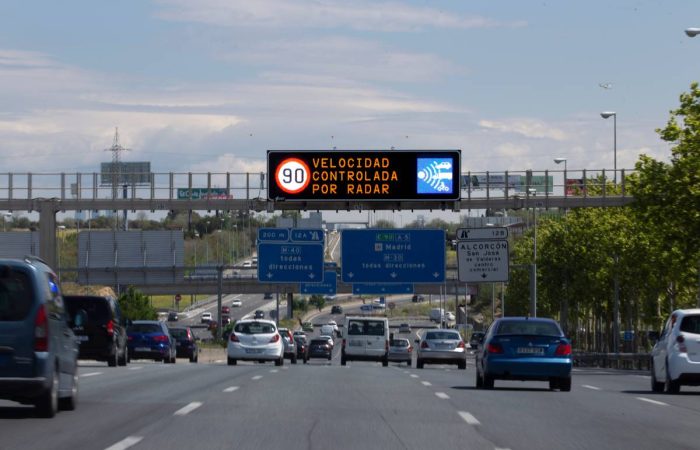
Why Full Matrix VMS are transforming traffic management in 2026
Illuminated traffic signs are crucial for road safety. They help guide drivers and prevent accidents. Their use is vital in emergency situations and for traffic management within road signaling systems.
This type of signage differs from general signaling through its specialized focus. It is designed to be visible in adverse conditions, such as at night or during bad weather. Furthermore, it is essential for emergency vehicles, where every second counts.
Regulations govern their use to ensure effectiveness and safety. These signs not only improve visibility but also influence driver behavior.
We are the creators and market leaders of Full Matrix technology. With Full Matrix, Fixalia demonstrated the revolutionary potential of variable lighting in these systems and paved the way toward superior standards in the sector. We can create messages and iconography fully adapted to any type of situation.
What Are Variable Message Signs and What Types Exist?
Specialized illuminated traffic signs are designed to transmit critical information visually when conventional signage may not offer sufficient visibility—especially at night, in adverse weather conditions, or in situations requiring a rapid response.
On highways and roads, these signs provide information on speed limits, lane openings or closures, incidents, roadworks, and weather conditions that may affect traffic. They are also used in emergency vehicles to alert other drivers quickly and effectively.
At Fixalia, we develop Sago illuminated traffic signs adapted to the needs of each infrastructure. These solutions provide road users with clear and up-to-date information.
Road signaling never stops evolving, and 5G-VX technology is the clearest proof of this.
For decades, specific traffic signs were limited to transmitting a single fixed message. They are now evolving into what we call Variable Message Signs: intelligent devices that retain the original function of the sign while significantly expanding its real-time communication capabilities. This evolution does not replace the concept of traffic signage but takes it to the next level, adapting it to increasingly dynamic traffic conditions and to the needs of road authorities that require up-to-date information in real time.
As manufacturers of Intelligent Transport Systems (ITS), Fixalia designs, manufactures, installs, and maintains 5G-VX panels designed to offer maximum field performance.
The integration of TrueType fonts significantly improves message readability, while the ability to generate motion graphics opens a range of communicative possibilities that traditional signs never had. Added to this is a smart power system that optimizes the panel’s energy consumption and reinforces its long-term reliability—a feature especially valued in installations that must operate uninterruptedly on highways, in tunnels, or in urban environments.
However, a traffic sign only fulfills its function if it can communicate with the rest of the system and remain visible no matter what. That is why our 5G-VX panels connect with all types of protocols (DGT+/DGT/NTCIP/Modbus), ensuring seamless integration with existing control centers and management platforms.
This also ensures they are perfectly visible under any weather condition, making certain the message reaches the driver whether conditions are clear or there is thick fog or heavy rain. Ultimately, 5G-VX technology is not a promise for the future: it is the real evolution of traffic signs already transforming today’s mobility.
- Variable Message Signs for highways and roads can incorporate different types of signals:
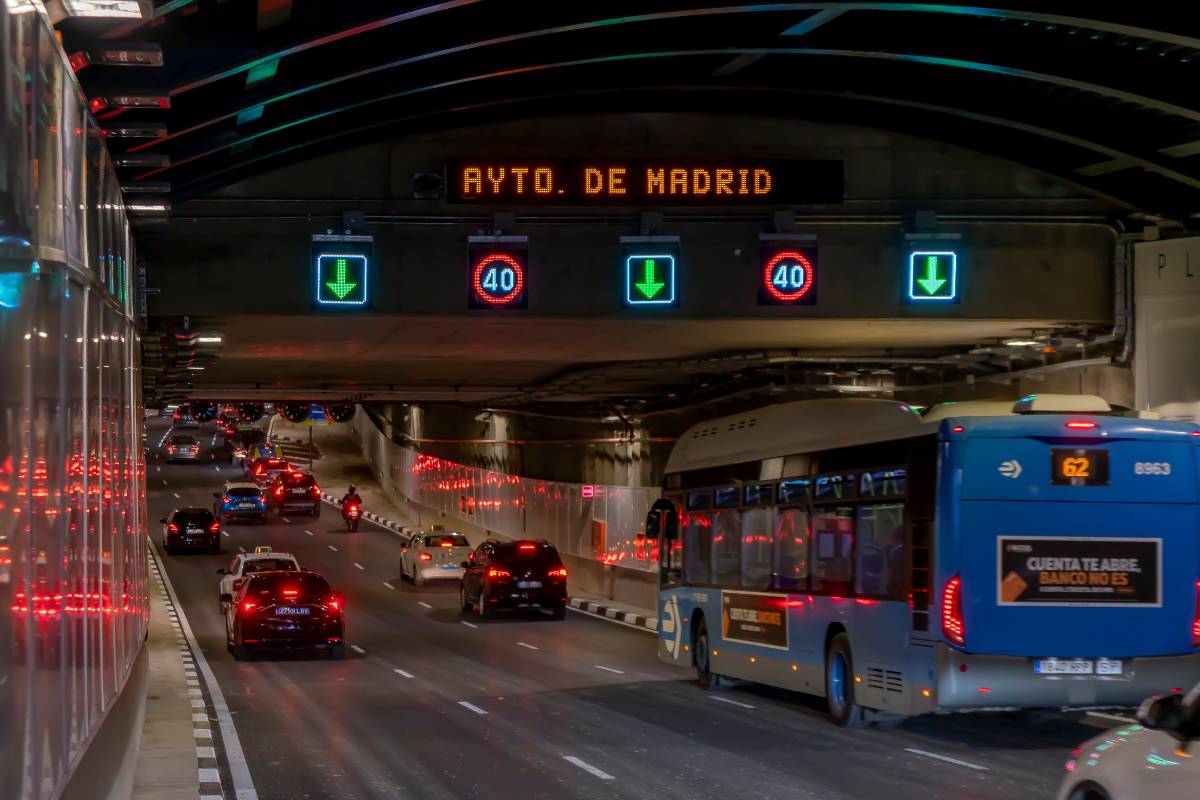
- Variable Speed Limit Signs (VSL): Display the permitted speed limit and can adapt to traffic conditions.
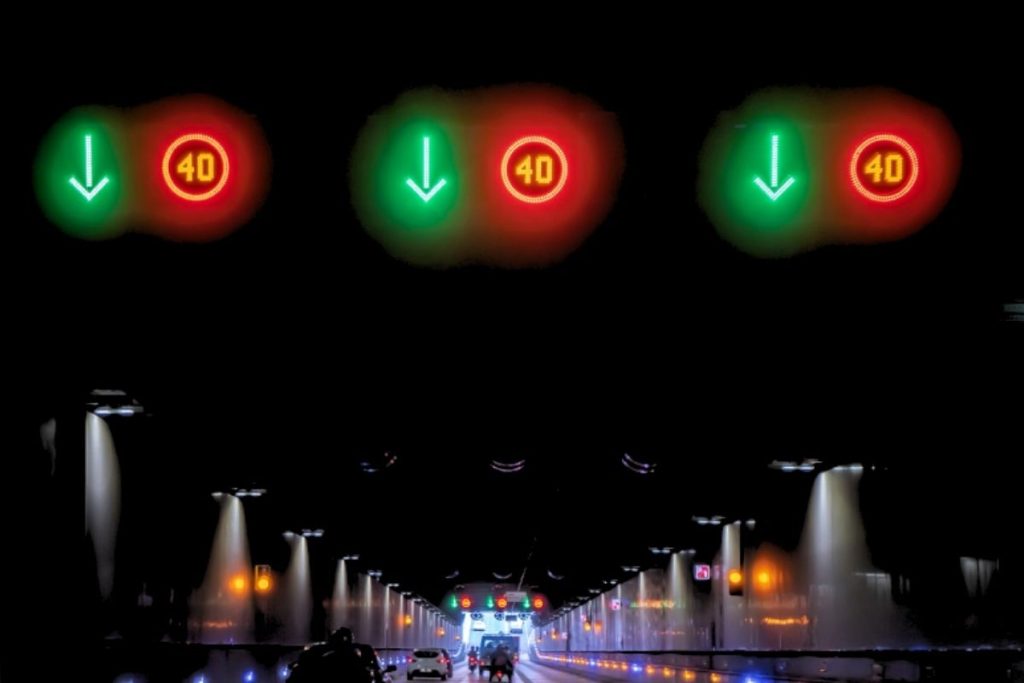
- Lane Control Signs (LCS): Indicate the opening, closing, or enabled direction of a lane using “X” and arrow symbols.
- Warning Signs (WS): Communicate warnings and specific information about road conditions.
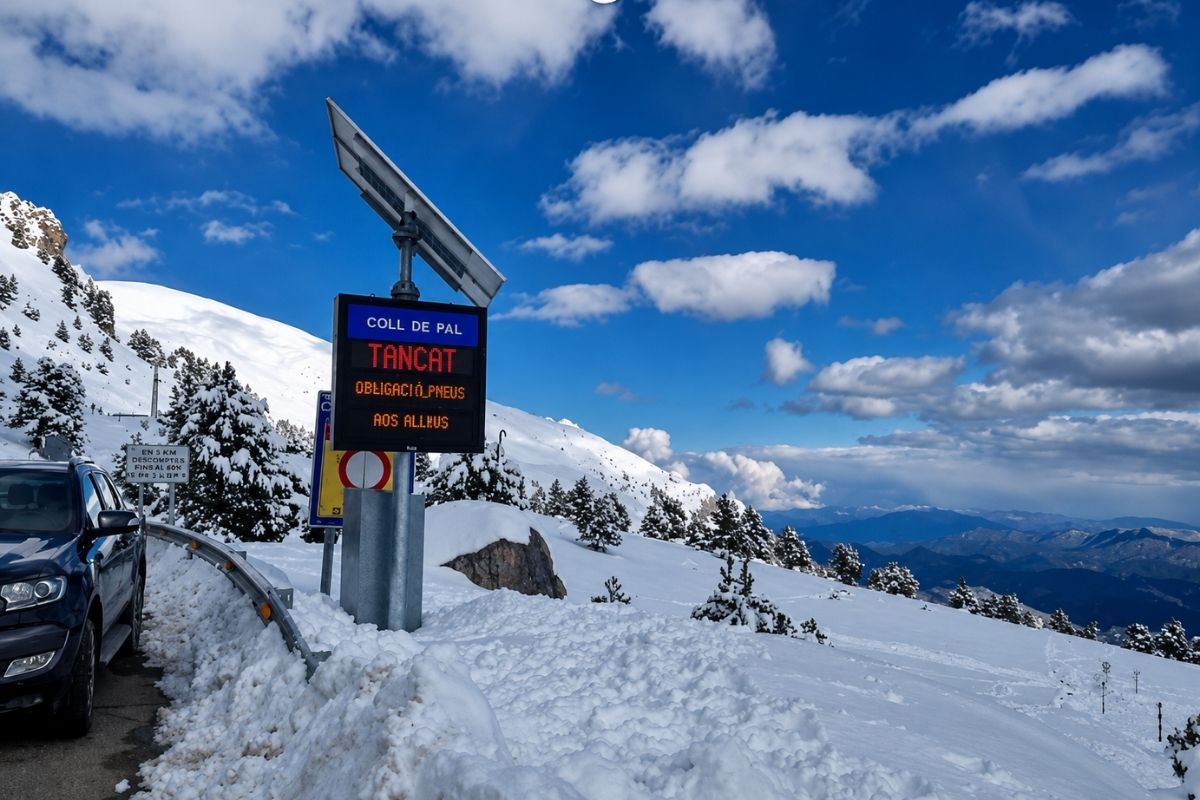
- Mountain Pass Signs: Provide information about snow, ice, and other circumstances that may affect travel.
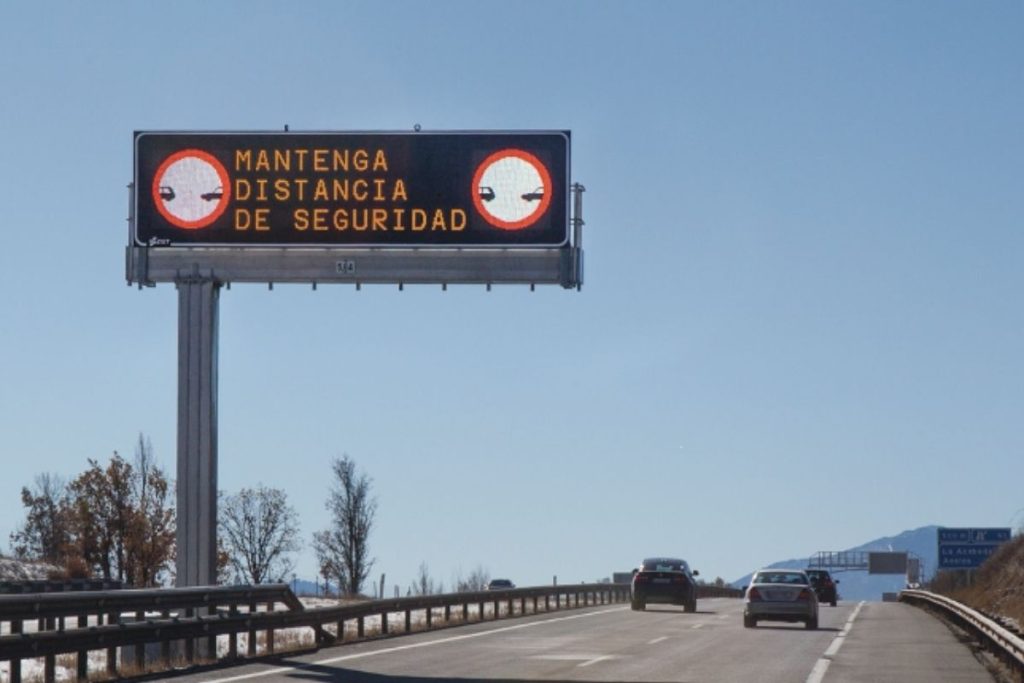
Regulations Applicable to Variable Message Signs
Variable Message Signs must meet technical requirements that guarantee their visibility, legibility, and operation under different traffic conditions.
In Spain, the UNE-EN standard for Variable Message Signs establishes criteria related to luminance, contrast, color uniformity, legibility, and resistance to adverse environmental conditions. These requirements apply to signs installed on roads, highways, tunnels, and urban access points.
Additionally, illuminated signs must be able to integrate with control centers and traffic management systems. The UNE 199051-2:2012/1M communication protocol allows devices to send and receive messages in a standardized way, regardless of the manufacturer or the system used.
Key applicable requirements include:
- Legibility and visibility during both day and night.
- Adequate luminance and contrast.
- Uniformity of colors and displayed messages.
- Resistance to humidity, dust, and temperature changes.
- Compatibility with traffic management and control systems.
Compliance with these regulations reduces interpretation errors and guarantees the operation of signs in critical environments and situations.
Full Matrix Technology in Variable Message Signs
Fixalia’s Variable Message Signs use LED technology, offering high brightness, lower energy consumption, and greater durability.
In Full Matrix systems, each LED, or group of LEDs, is controlled independently. This allows messages to be adapted to show text, arrows, symbols, and pictograms according to road conditions.
Key features include:
- High Visibility: Messages can be read under various lighting and weather conditions.
- Content Flexibility: Allows for the display and modification of text, symbols, and pictograms.
- Brightness Regulation: Adjusts intensity to prevent insufficient or excessive lighting.
- ITS Integration: Can connect with control centers, sensors, cameras, and other traffic management systems.
- Remote Monitoring: Facilitates incident detection and equipment maintenance.
Applications of Variable Message Signs
Illuminated traffic signs adapt to different infrastructures and mobility needs. At Fixalia, we develop solutions for tunnels, cities, roadworks, and temporary incidents.
- Tunnels: Variable message panels and signs for tunnels allow messages to be modified in real time from the control center. They can also be integrated with ventilation, emergency, and lighting systems to coordinate incident response.
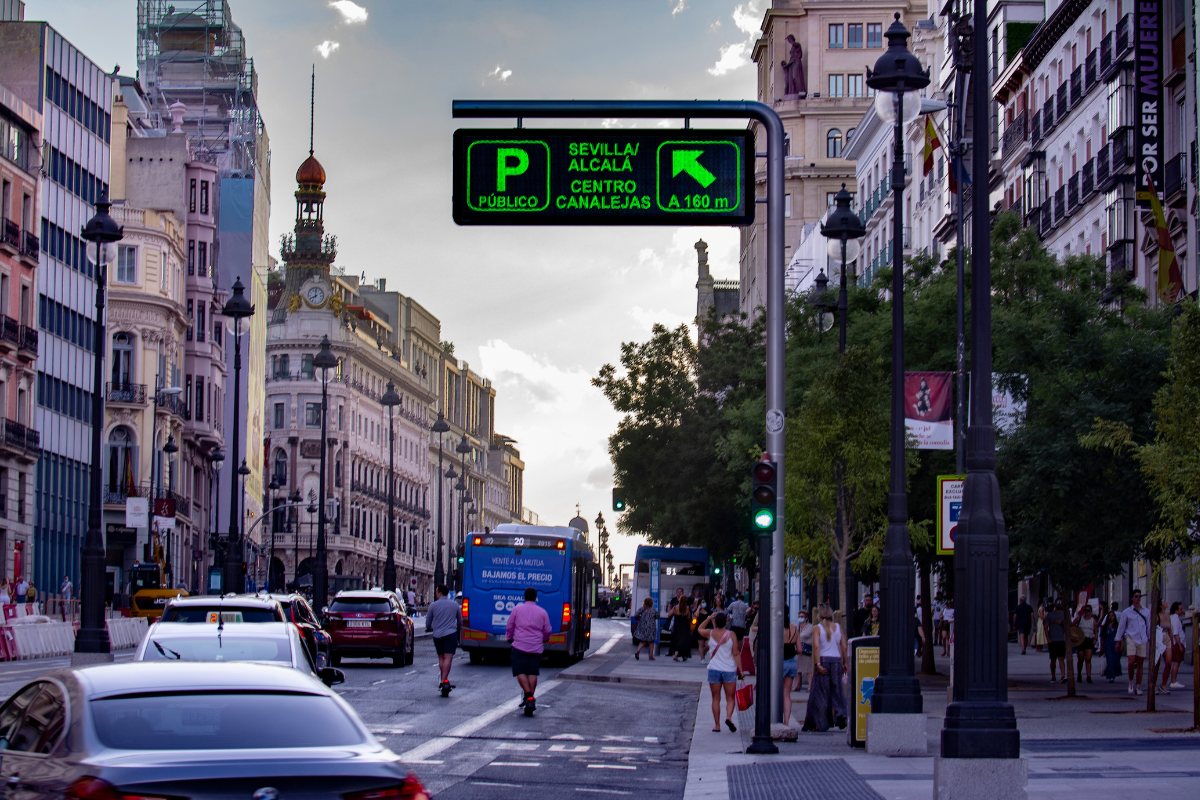
- Cities and Urban Environments: Traffic panels and signs for cities communicate detours, restrictions, alerts, and changes in circulation. They can be managed remotely and integrated with Smart City systems to update information based on traffic status.
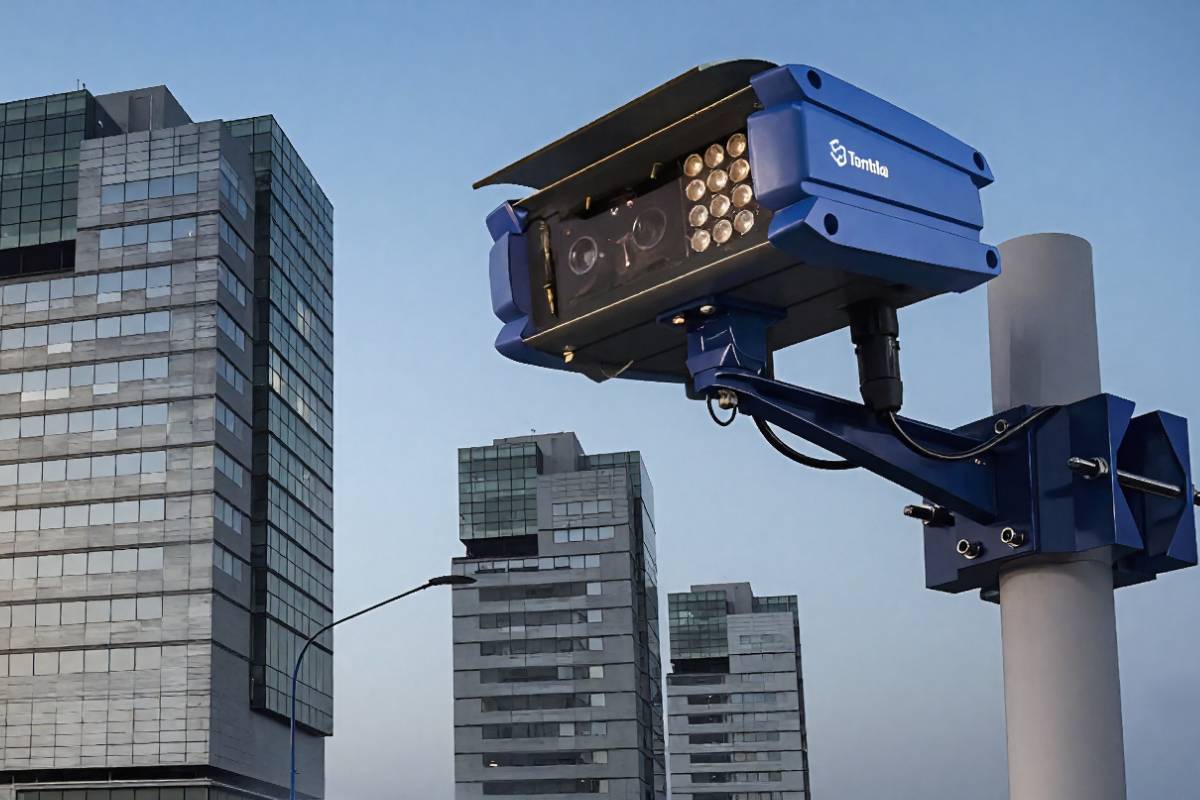
- Roadworks and Temporary Incidents: Mobile message panels installed on trailers allow signage to be moved to wherever it is needed. They can also incorporate cameras and sensors to improve traffic supervision and control.
Maintenance and Durability of Variable Message Signs
Periodic maintenance allows for the detection of faults before they affect the operation of the signs. To guarantee the durability of the equipment, the following aspects must be monitored:
- Component Status: Checking the condition and operation of the equipment.
- Environmental Resistance: Protection against humidity, dust, and temperatura changes.
- Remote Supervision: Monitoring equipment status from management centers.
- Energy Efficiency: Lower consumption and longer lifespan thanks to LED technology
The Future of Variable Message Signs
The evolution of variable message signs is moving toward greater integration with control centers, smart sensors, and connected systems capable of adapting information in real-time.
At Fixalia, we continue to develop solutions with LED and Full Matrix technology to offer more dynamic, precise messages adapted to traffic conditions. This evolution improves traffic management and allows for a faster response to incidents.
Do you need Full Matrix Variable Message Signs?
Tell us about your project and we will advise you on the best smart signage solution.